 The most important measures and dimensions
Based on the glued beech wood often used as a kitchen worktop, we have also used this material for our kitchen block, albeit in different strengths. These are to be obtained 20 mm and 40 mm thick boards not in hardware stores, but only in specialist shops. The four legs, on the other hand, are made of profane spruce frame wood: on the one hand, because those made of beech are very expensive, on the other hand, because the legs are supposed to be stained black anyway and the type of wood is then no longer recognizable.
Speaking of surface treatment: Whilst the legs are stained and clear coated and all beech frames and MDF bases are only clear coated, we recommend, the surface of the countertop with a simple cooking oil (Linseed oil or linseed oil varnish) to be treated several times. This is how you protect and impregnate the sensitive beech against moisture, without running any risk, To turn your food in solvents or to find chipped paint residues in the food.
Even when cooking oil is used, the wood must be finely and carefully sanded, preferably with 240 grit sandpaper after each oiling. You have to repeat grinding and oiling of the worktop once a year.
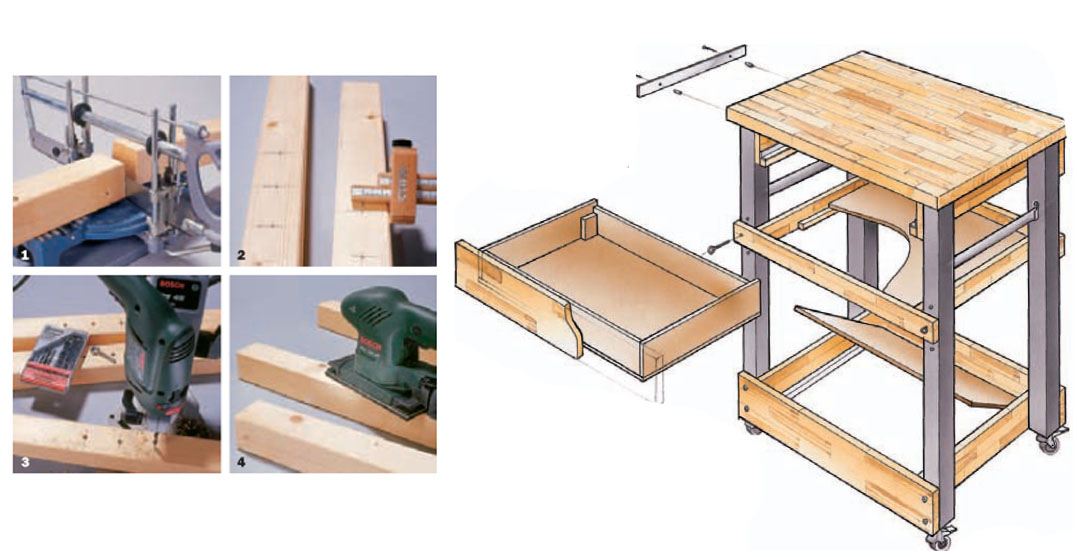
1 The frame timbers made of spruce (2,5 m long) cut to size on a miter saw, unless you have a cap- or have a table saw available.
2 You can use a measuring ruler to ensure that the drilling points for the center floor beams on the frame timbers are positioned exactly in the middle. Mark the points lengthwise with a pencil.
3 For the floor supports (Ringschrauben M6x40 mm) drill holes from on the drill stand 7 mm diameter and 30 mm depth.
The holes are countersunk for easier insertion of the eyebolts.
4 Sand the frame timbers with 180 grit sandpaper, after you water them. Redrill all holes by hand.
Before the stain is applied, the coniferous wood must be watered. The wood fibers soak up water and rise from the surface – the wood becomes rough. It is then sanded and the smooth surface can be stained. If you give up water, the stain would also be removed again by grinding.